C&I BESS
Commercial & Industrial Storage
Site-level energy storage for demand management, renewable integration, resilience and energy optimization.
From battery architecture and system integration to manufacturing, validation and site deployment — a premium BESS platform concept for commercial, industrial and utility applications.
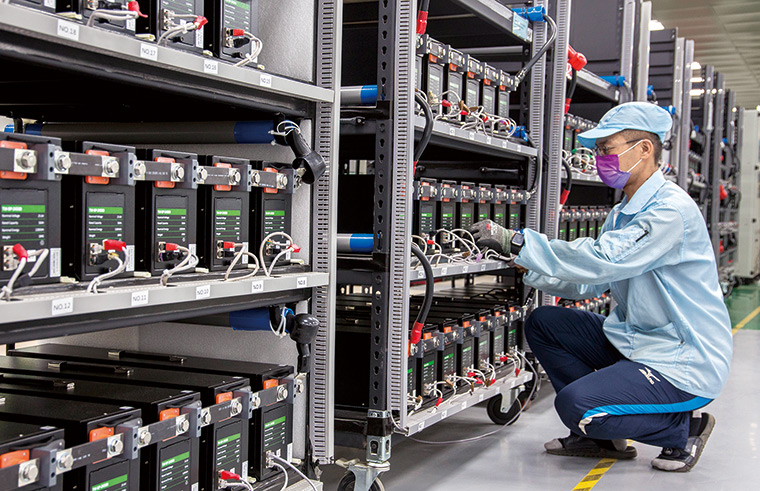
A professional BESS manufacturing environment is more than battery assembly. The complete system must bring together electrochemical storage, mechanical structure, power electronics, protection, thermal management, controls and communications in a controlled production workflow.
This website structure is intentionally manufacturer-led: the factory, engineering process, test regime and system architecture remain as visible as the final product.
Product families are presented as configurable platform types. Final ratings, dimensions, enclosure classes and certifications should be replaced with actual manufacturer data.
Site-level energy storage for demand management, renewable integration, resilience and energy optimization.

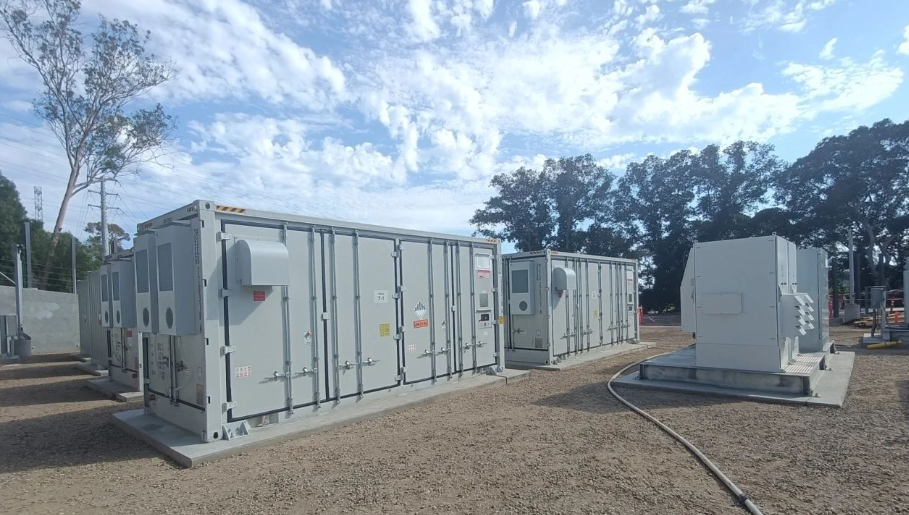
Compact outdoor architecture combining batteries, controls, thermal management and protection in a serviceable enclosure.

Factory-integrated container platform for larger C&I, renewable, microgrid and grid-support projects.

Structured mechanical and electrical platform for module mounting, sensing, protection, bus connections and service access.

Multi-container energy storage deployments coordinated with PCS, medium-voltage equipment, plant controls and grid infrastructure.
Explore the internal architecture of a containerized BESS — from battery packs and BMS supervision to thermal management, power conversion, energy management and auxiliary protection systems.

High-energy battery assemblies organized into modular storage blocks for scalable system capacity.
Cell and rack monitoring, balancing, protection logic and operating-state communication.
Liquid- or air-cooling architecture controls temperature distribution across the battery system.
Bidirectional AC/DC conversion manages charging, discharging and the electrical interface to the site.
Supervisory dispatch coordinates battery operation with grid, renewable generation and site demand.
HVAC, fire detection, suppression, distribution and controls support safe, reliable system operation.
Each layer adds electrical, mechanical, thermal and control complexity. The system becomes progressively more integrated as it moves from cell to container.
Electrochemical storage element.
Cells assembled with sensing and interconnection.
Modules arranged into serviceable high-voltage storage racks.
Rack groups coordinated through protection and control layers.
Complete integrated storage subsystem ready for plant-level integration.
The BMS hierarchy collects battery data, manages protection logic and communicates system state upward through the control architecture.
The PCS manages bidirectional AC/DC power conversion while the EMS coordinates operating strategy across the battery, grid, solar and site loads.
Battery modules require controlled thermal conditions. The exact architecture may use liquid cooling, air cooling or a project-specific combination depending on product design.
A structured process keeps assembly, wiring, controls, thermal integration and final verification connected to traceable production records.
Component identity, condition, documentation and specified incoming checks before release to production.
Mechanical assembly, module installation, bus connections, harness routing and rack-level integration.
Power cabling, control harnessing, sensor connections, communication wiring and BMS commissioning checks.
Power conversion, auxiliary systems, coolant / airflow components and service interfaces assembled to the system design.
Integrated functional checks, communication verification, safety interlocks, inspection records and controlled release for shipment.
Power conversion and site controls coordinate battery charging, discharging and load support while the utility connection remains available.
Solar generation, site load and battery dispatch are coordinated through the AC bus and plant controls.
Following grid loss, the system isolates from the utility connection and uses local energy resources to support defined priority loads, subject to the project’s islanding design.
The EMS can coordinate solar priority, battery charging, demand management and backup support according to site conditions and operating objectives.
An EMS or microgrid controller coordinates distributed energy resources, utility connection and site loads in grid-connected or islanded states.
01
02
03
04
 05
06
07
08
09
Bring your site load profile, grid conditions, solar generation, backup requirement and operating objective. The next step is to define the right architecture before selecting the hardware.
Replace the placeholder email, brand identity, product ratings, certifications and project references before publishing.